


Concerts
6 July, 18:15
Johannes de Lublin Tablature
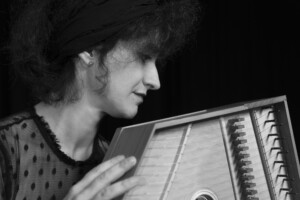
Corina Marti, Renaissance harpsichord
Old University Library Building, Auditorium Hall 📍
6 July, 18:15
Program
- Preambulum in g
- Surrexit Dominus valete luctus
- Passamezzo antico / Proporcia Jeszcze Marcynye
- Deus qui sedes super thronum (after Johann Walter)
- Perché al viso / Italicum (after Sebastiano Festa)
- Praeambulum in F
- Christe Regi omnes Jubilemus 1547
- Christe iam surrexit
- Poznanie
- Preambulum in d (N.C.)
- Plus mille regres (after Josquin des Prez)
- Alia Italica
- Preambulum super d
- Bona (corea)
- Preambulum in c
- Sicut lilium inter spinas (after Antoine Brumel)
The Johannes de Lublin tablature is one of the most remarkable monuments of sixteenth-century European keyboard culture and the largest surviving collection of organ music from Renaissance Europe. Preserved today in Kraków, the manuscript belonged to the monastery of the Canons Regular in Kraśnik near Lublin and was bound in 1540, as indicated by the inscription on its cover. Written in German organ tablature notation, it comprises 260 folios containing more than 230 compositions, two theoretical treatises, and over 250 didactic musical examples. The manuscript was compiled over more than a decade (1537–1548) by several scribes, though its principal compiler and owner was undoubtedly Johannes de Lublin himself.
Little is known about Johannes’s life. He was probably educated at the University of Kraków and may have worked there as an organist before joining the monastery in Kraśnik. Yet his biography survives chiefly through the manuscript that bears his name. Beyond its documentary value, the tablature reveals the intellectual and artistic horizons of a Renaissance musician. Its theoretical sections discuss instrumental counterpoint and organ tuning, offering invaluable insight into sixteenth-century keyboard practice.
The repertory itself is extraordinarily diverse. Liturgical works coexist with secular chansons, motets, dances, and instrumental preludes. Alongside arrangements of vocal polyphony appear compositions intended specifically for keyboard instruments, demonstrating both contrapuntal sophistication and virtuoso instrumental writing. The anthology includes works of Polish, German, French, and Italian provenance, reflecting the international circulation of musical styles in Renaissance Europe. At the same time, the manuscript remains deeply rooted in Polish culture through vernacular dance titles and the presence of composers such as Nicolaus Cracoviensis (N.C.).
The seemingly unordered structure of the tablature suggests that it functioned as a living and practical collection, used directly by musicians rather than conceived as a finished anthology. Today, the Johannes de Lublin tablature stands not only as a unique source for the study of Renaissance keyboard music, but also as a vivid testimony to the richness of musical life in sixteenth-century Poland.
Harpsichord and recorder player CORINA MARTI is internationally recognized for her “strikingly superior” and “expressive” (Toccata) interpretations, and “infallible” (Diapason) technique. Her extensive discography of repertoire ranges from the fourteenth-century istanpitte and intabulations to – and beyond – the chamber music and solo concertos of the High Baroque and reflects the breadth of her musical interests and technical skills.
She leads a full life as a soloist, chamber musician and teacher, travelling regularly across Europe, both Americas, and the Middle and Far East. She has appeared with numerous early music ensembles and orchestras (including Hespèrion XXI, Coro della Radiotelevisione Svizzera Italiana and Helsinki Baroque Orchestra) and is artistic co-director and founding member of La Morra, an award-winning Late Medieval and Early Renaissance music ensemble which “never fails to keep the listener’s attention alive” (Gramophone).
Her ongoing research into aspects of the repertoire and reconstruction of late-medieval and early-renaissance keyboard instruments and recorders has contributed substantially to the present-day revival of these instruments. She teaches the next generation of early music performers at the Schola Cantorum Basiliensis in Basel, Switzerland, and in masterclasses worldwide
7 July, 19:00
Krasne barszo. Music from Late Medieval Kraków
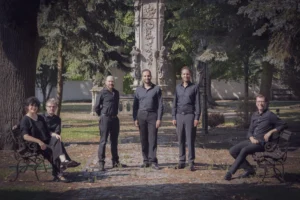
La Morra, dir. Corina Marti and Michał Gondko
Doron Schleifer, Ivo Haun de Oliveira, Matthieu Romanens, voices
Corina Marti, clavicimbalum, recorders
Michał Gondko, lute
Vojtěch Jakl, fiddle
Kościół Św. Trójcy / Holy Trinity Church, pl. Małachowskiego 1 📍
Program
- Chwala thobye gospodzynye (anonymous, PL-KÓ 801, fol. 114v)
- Ave maris stella (anonymous, PL-Kj 320, fol.IIIv)
- Gloria (anonymous, PL-Pu 7012, recto, reconstruction: Antonio Calvia)
- Postaris in presepio / Maria amplioribus (anonymous, PL-Wn III.8054, fol. 185r)
- Maria en mitissima (anonymous, PL-Wn III.8054, fol. 176r)
- Ave mater o Maria (anonymous, PL-Wn III.8054, fol. 186v)
- Sancta Maria succurre miseris (chant, PL-KIk 1, fol. 218r)
- Magnificat (Mikołaj Radomski, PL-Wn III.8054, 182r-183v)
- [Rondellus] (Othmarus Opilionis de Jawor, I-TRbc MS 93, fol. 365v)
- Hystorigraphi aciem (Mikołaj Radomski, PL-Wn III.8054, fol. 174v-175r)
- Cracovia civitas (anonymous, PL-Wn Lat. F.I.378, fol. 27v-29r / PL-Wn III.8054, fol. 173r-174r, 195v)
- [Balatum] (Mikołaj Radomski, PL-Wn III.8054, fol. 185v)
- Jesus Christus nostra salus (anonymous, PL-Kj 1267, fol. 157v-158)
- Sanctus: Gustati necis pocula (Schweikl? Jacobus de Clibano? PL-Wn III.8054, fol. 199v-200r)
- Nitor inclite claredinis (Nicolaus [Mikołaj Radomski?], PL-Wn III.8054, fol. 180v-181r, reconstruction: Michał Gondko)
- Presulis eminentiam (Petrus Wilhelmi de Grudencz, PL-Kj 2464, fol. 13r and 12v)
- Breve regnum erigitur (anonymous, PL-Wn III.8054, fol. 181v)
LA MORRA is well-established as one of Europe’s leading ensembles for Late Medieval and Early Renaissance art music. An international vocal-instrumental formation named after Henricus Isaac’s famous instrumental fantasia, LA MORRA makes its home in Basel, the cosmopolitan cultural capital of Switzerland, where the tradition of historically informed performance of early music at the renowned Schola Cantorum Basiliensis dates back to the 1930s. Under the joint artistic leadership of Corina Marti and Michał Gondko, LA MORRA re-configures itself according to the requirements of the repertoire, usually numbering four to seven musicians. Reputed for the evocative, thoroughly researched programming as well as interpretations that “never fail to keep the listener’s attention alive” (Gramophone), the ensemble is constantly busy performing and recording. It has travelled extensively across Europe as well as in the United States and in the Far East, appearing in the most prestigious early music festivals and concert series. LA MORRA’s CD releases are enthusiastically received. Among the proofs of this are numerous phonographic distinctions and the constantly high ratings in the international music press.
In the first decades of the 15th century, Kraków, “that city, above all given to theology, virtually abandoning all the other liberal arts, placed a particularly high value on music, thanks principally to which it could achieve the greatest possible solemnity for divine services”. The author of this report, an expatriate Florentine humanist Filippo Buonaccorsi, even states that the city was “gripped by the greatest enthusiasm” for music. Evidence of this seems to survive chiefly in two musical manuscripts, PL-Wn III.8054 (copied, as has recently been demonstrated, by Petrus de Kazimiria) and PL-Wn Lat. F.I.378, both dating from around 1440. Formerly part of the Krasiński and Załuski collections, they contain predominantly sacred liturgical music, but are chiefly known for their secular works celebrating the city of Kraków and the royal family that resided therein.
A central figure in these sources is the composer Mikołaj Radomski. His identity is unclear: is he identical with a priest mentioned in some papal documents in 1390, or rather with a “clavicymbalista domine regine Poloniae” documented in Kraków in 1422, or perhaps with yet another person? The ceremonial composition Hystorigraphi aciem, written on the occasion of the birth of Prince Kazimir (1426), suggests that he was no stranger to the royal court. It seems likely that Radomski’s sacred music originated in connection with the cathedral on Wawel Hill or with another prominent church in the city. Lastly, both manuscripts may be evidence of his activity as a teacher.
In Kraków, Radomski may have encountered the poet and composer Petrus Wilhelmi de Grudencz, who studied at the university in the 1420s (Wilhelmi is now widely regarded as perhaps the most important Central European poet-composer of his time); and perhaps also the six “cantores reverendissimi patris domini Sbignei Cracoviensis Episcopi”, documented in Kraków in 1441 (among them Othmarus Opilionis de Jawor, author of a textless composition that survives in one of the Trent codices). Since such men served not only as singers but also as trusted envoys, they could very well have acted as carriers of the international repertoire to Kraków.
For PL-Wn III.8054 and PL-Wn Lat. F.I.378 testify to an intensive study of Italian and French art music. Many of Radomski’s own works are stylistically informed by Antonio Zacara da Teramo’s and Johannes Ciconia’s liturgical music, and he was also familiar with more modern compositional techniques (as his Magnificat reveals). Local musicians like Radomski were furthermore acquainted with French chansons, in which they replaced the original texts with new ones in Latin (see, for example, Maria en mitissima), as well as with Italian laude (such as Ave Mater o Maria). Occasional notes by the copyists (for instance krasne barszo, “very beautiful”) reveal admiration for this music, which they clearly sang themselves (as performance remarks testify). The use of the word “opus” documented in PL-Wn III.8054 is among the earliest recorded occurrences of this term in reference to a musical work.
The insight into Kraków’s musical life afforded by PL-Wn III.8054 and PL-Wn Lat. F.I.378 can be expanded by considering types of music that may have been more familiar at the time to many people in Poland (and in Central Europe in general) than the works of Zacara and Ciconia. Besides chant, this included less complex polyphonic sacred and secular music, such as the two-voice Ave maris stella and the student song Breve regnum erigitur, respectively. The latter, together with the Latin song Presulis eminentiam by Petrus Wilhelmi de Grudencz (preserved in a manuscript that belonged to a Kraków student and dates from around 1420), betrays the connection of some of the sources with the city’s educational institutions.
Michał Gondko
9 July, 19:00
Music from the 16th-century Polish sources
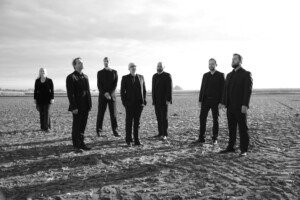
Men’s Vocal Ensemble Gregorianum
Director: Berenika Jozajtis
Countertenor: Robert Lawaty
Tenor: Jacek Iwaszko, Marcin Trzciński
Baritone: Tomasz Gozdek
Bass: Krzysztof Chalimoniuk, Leszek Kubiak
Kościół św. Jacka / St Jack Church, ul. Freta 8/10 📍
Program
- Marcin Paligon – Rorate caeli
- Wacław z Szamotuł – In te domine speravi
- Josquin/Krzysztof Borek – Missa Mater Matris – Kyrie
- Tomasz Szadek – Officium in melodiam motettae Pisneme – Gloria
- Anonymous – Magnificat Primi Toni
- Giulio Belli – Salve regina
- Franciszek Lilius – Missa a 4 voci – Credo
- Jean Lhèritier – Magnificat Quarti Toni à voce pari
- Krzysztof Borek – Missa Te Deum – Sanctus
- Marcin Leopolita – Missa Paschalis – Agnus dei
- Walentyn Gawara – Per merita sancti Adalberti
The surviving musical sources from 16th-century Poland provide only a partial glimpse of a rich and diverse musical culture, shaped by a history that has not always been kind to its documentary heritage. Among the most important witnesses to this tradition are the collections of the Wawel Cathedral in Kraków. Preserving repertoire associated with one of the principal musical centres of the Polish Kingdom, they reveal the close connections linking local musicians with the artistic currents that shaped Renaissance Europe. Rather than merely receiving foreign influences, composers and performers in Kraków adapted, transformed, and enriched the compositional models of their age.
The programme is built around five Mass cycles preserved in Wawel sources. They illustrate a variety of approaches to pre-existing musical material, from Krzysztof Borek’s reworking of Josquin’s Missa Mater Patris and Tomasz Szadek’s parody mass based on a chanson Pis ne me peult venir by Thomas Crecquillon, to Borek’s Missa Te Deum and Marcin Leopolita’s Missa Paschalis, founded on well-known liturgical and devotional melodies. Franciszek Lilius, an Italian-born composer active in Kraków, represents a slightly later generation whose music combines Renaissance contrapuntal practice with elements of early Baroque musical rhetoric.
Wacław of Szamotuły’s In te Domine speravi is one of the earliest Polish compositions to be published abroad (Nuremberg 1554), Giulio Belli’s Salve Regina, in turn, survives in the Pelplin Tablatures as one of more than eight hundred European works transmitted there in organ intabulations. The two Magnificat settings preserved uniquely in Kraków represent some of the finest polyphonic repertoire transmitted in Wawel sources. The anonymous Magnificat Primi Toni, probably of Franco-Flemish origin, is an unusually expansive and festive composition, while Jean Lhéritier’s concise setting is one of the relatively rare Magnificats written for equal voices.
Taken together, these works offer a glimpse into a musical culture situated at the crossroads of local tradition and international exchange, demonstrating the place of Polish musicians and institutions within the wider network of Renaissance Europe.
Men’s Vocal Ensemble Gregorianum was founded in 2005 and has been directed by Berenika Jozajtis – conductor, director of several choirs and ensembles, and a social activist working for the development of the choral movement. The group specialises in Renaissance music, although from time to time it also turns to Medieval (Gregorian chant, Guillaume de Machaut) or Baroque music (Marcin Mielczewski, Antonio Lotti). Gregorianum has released five CDs so far – O magnum mysterium (2011) devoted to Spanish masters of Renaissance polyphony, and three albums with the repertoire of Rorantists’ Chapel at Wawel Cathedral in Cracow – Magnificat anima mea Dominum (2013), Omnes sancti Dei (2014) and Virgini Mariae laudes (2016), as well as Memento homo (2022), presenting the Catholic Lenten music by English composers.